

The Government of Mendoza has approved a ten-year extension of the exploitation concessions operated by VenOil S.A. in the Piedras Coloradas–Intermediate Structure and Cacheuta areas.
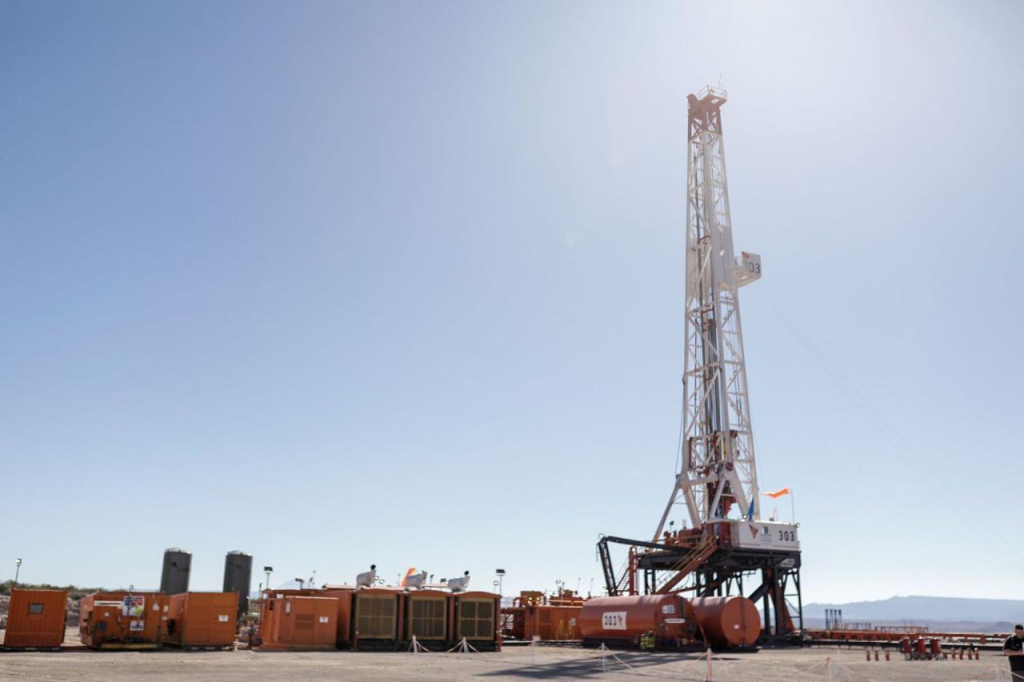
The Government of Mendoza has approved a ten-year extension of the hydrocarbon exploitation concessions operated by VenOil S.A. in the Piedras Coloradas–Intermediate Structure and Cacheuta areas, ensuring continuity of production, encouraging new investment, and reinforcing the development of conventional oil fields in the province.
The measure was adopted within the framework of provincial policy aimed at sustaining and strengthening hydrocarbon activity, and authorizes the company to continue exploitation and development work under a new operational plan that includes additional investments, technical improvements, and actions focused on recovering and sustaining production.
“This decision seeks to guarantee continuity of operations, promote new investments, and consolidate productive development in Mendoza’s conventional fields,” said Jimena Latorre, Minister of Energy and Environment.
The areas covered by the extension already have active operations and are considered strategic for maintaining employment, generating revenues for the Province, and strengthening the local productive network. The Cacheuta area, in particular, holds a significant place in Mendoza’s hydrocarbon history, as it was one of the first locations where oil extraction activities were carried out in both the province and Argentina, beginning in the late nineteenth century.
VenOil is a Mendoza-based operator headquartered in Luján de Cuyo, with experience managing conventional hydrocarbon fields in both Mendoza and Santa Cruz. Its regional profile enables the company to operate mature fields that are often not prioritized by large operators but remain highly valuable for local economies and for sustaining provincial production levels.
Investment plan and operational commitments
“VenOil is a local operator with solid experience in conventional fields. Its regional focus allows it to work in areas that may not be strategic for large companies but are essential for local development and for maintaining hydrocarbon production,” said Lucas Erio, Director of Hydrocarbons.
Erio explained that the extension is subject to strict compliance with an approved investment plan, which includes development activities, maintenance of surface facilities, optimization of existing wells, and actions aimed at improving the overall efficiency of the reservoirs. The plan foresees new drilling activities in the Cuyo Basin starting in 2027, the reactivation of wells that are currently shut in, and the implementation of pilot secondary recovery projects. These measures are designed to sustain production and gradually recover output in these conventional fields.
The agreement also establishes specific commitments in environmental management, operational control, and institutional strengthening. Among the main obligations are environmental remediation and cleanup actions, as well as the technical abandonment of wells that are no longer in operation, in accordance with approved procedures and under the supervision of the provincial authority. These requirements are intended to ensure responsible, verifiable operations with permanent oversight by control agencies.
From a fiscal standpoint, the decree introduces an innovative variable royalty scheme linked to the sale price of crude oil. When oil prices are lower, the applicable royalty rate is reduced, while higher prices trigger an increase in the royalty percentage. This mechanism allows the Province to share market risk with the operator during unfavorable price scenarios, helping to sustain activity and investment, while also ensuring that Mendoza captures a greater share of the value generated when market conditions improve.
The extension also establishes a broad and rigorous oversight framework that authorizes the provincial authority to carry out unannounced inspections, request technical and operational information, audit processes, and verify compliance with all commitments assumed by the operator. This control system is designed to ensure transparency, traceability, and effective enforcement of the agreed conditions.
This decision forms part of a broader provincial strategy aimed at reactivating conventional hydrocarbon areas through new operators and management models that prioritize development activity, production, environmental stewardship, and local development. Similar approaches have already been applied in other areas of the province, with positive results in terms of investment levels, employment, and production recovery.
It is also worth recalling that, through a resolution issued in 2025, the Ministry of Energy and Environment authorized the transfer of the Piedras Coloradas and Cacheuta concessions from CGC to VenOil S.A. That decision formalized the full transfer of the areas, ensured operational continuity, and made it possible to sustain combined production levels exceeding 200 cubic meters of oil per day.