

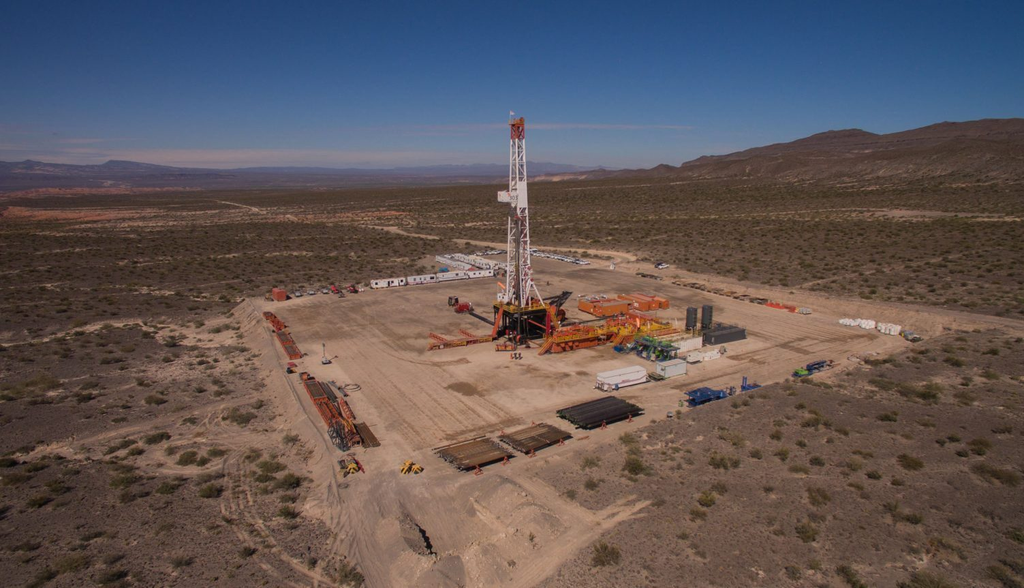
The Atamisqui and El Manzano areas were awarded as part of a bidding process launched in late 2025 under Mendoza’s continuous bidding model. The 25-year concessions include seven new wells, 58 interventions on existing wells, investment guarantees and strict environmental requirements.
The Government of Mendoza has awarded the exploitation concessions for the Atamisqui and El Manzano oil and gas areas, following a bidding process led by the Ministry of Energy and Environment to attract new investment, reactivate producing assets and strengthen the province’s hydrocarbon industry.
Both concessions were granted for a 25-year term. Atamisqui, located in the Cuyo Basin, was awarded to Petróleos Sudamericanos S.A., with a development plan that calls for $15.007 million in investment over the first ten years. El Manzano, in the Neuquén Basin, was awarded to Venoil S.A., which committed $30.975 million over the same period.
Combined, the two projects represent $45.982 million in committed investment, backed by work programs, activity plans and implementation schedules that the companies will be required to meet under the terms of their respective bids.
“What matters is not only the amount committed, but what that investment translates into,” said Minister of Energy and Environment Jimena Latorre. “New wells, secondary recovery and the reactivation of inactive wells. That means real activity on the ground, work for service companies and royalties for the province.”
The provincial Director of Hydrocarbons said the awards also demonstrate the continued potential of Mendoza’s conventional oil and gas industry.
“These awards confirm that Mendoza’s conventional fields still have significant potential. When there are clear rules and predictability, the market responds. We went from awarding a single area to a single bidder in 2019 to awarding seven areas in less than two years, with real competition among companies. That is a strong signal of Mendoza’s geological potential and the direction of the province’s energy policy.”
Strict Environmental Requirements and Ongoing Oversight
Environmental protection is a central component of both concessions. The decrees require operators to minimize impacts on the atmosphere and surrounding environment, apply industry best practices and maintain high standards for safety and well-integrity management.
Both concessions require the companies to submit decarbonization plans aimed at reducing greenhouse gas emissions through the use of the most advanced technology available. The venting of unburned natural gas is also prohibited.
Operators must carry environmental insurance in accordance with Argentina’s General Environmental Law No. 25,675 and submit an updated well-abandonment plan every year.
Environmental obligations also extend beyond the operating phase. In the event of a partial or total relinquishment of an area, the operator must submit an audit certifying that the acreage being returned is free of environmental liabilities.
The provincial government retains broad inspection and enforcement powers, including the authority to conduct inspections without prior notice and request documentation related to investments, contractual compliance and environmental conditions at the operations.
New Wells and Work on Existing Assets
The approved development plans call for seven new wells and 58 interventions on existing wells during the first decade of the concessions, across a combined area of 822 square kilometers.
At Atamisqui, the plan includes drilling one development well in the Cuyo Basin and carrying out 26 well interventions. More than $3.5 million will also be invested in infrastructure, including an evacuation pipeline, a power line and tank repairs.
At El Manzano, Venoil S.A. committed to drilling six new wells, representing $15 million — nearly half of the company’s total investment plan — as well as 32 interventions across four areas of the field. These include the heavy-oil zone, El Manzano Oeste and Los Volcanes. Another $3.7 million is earmarked for facility upgrades.
A significant portion of the investment is scheduled for the early years of the concessions: 68% of the total, or approximately $31.1 million, is expected to be deployed during the first five years.
This means a substantial share of the committed capital will translate into near-term activity rather than being deferred until the later years of the concession period.
Enhanced Recovery and Reactivation of Inactive Wells
Both development plans include secondary recovery projects and the conversion of existing wells into injection wells. These techniques can extend the productive life of mature fields and help recover reserves that are not currently being produced.
The programs also include pulling and workover operations on inactive wells, allowing existing infrastructure to be brought back into production while shortening development timelines and generating direct demand for local oilfield service companies.
For a province with a long history of conventional oil production, the strategy is aimed not only at attracting investment for new drilling but also at maximizing the value of mature assets that already have infrastructure in place.
Mendoza’s Continuous Bidding Model
Atamisqui and El Manzano were awarded through Mendoza’s continuous bidding model, a system designed to keep the province’s portfolio of available oil and gas areas open to investment proposals on an ongoing basis rather than relying exclusively on periodic bidding rounds.
The model is intended to streamline procedures, encourage competition and create opportunities both for new operators entering Mendoza and for companies already active in the province to reinvest and expand their operations.
With Atamisqui and El Manzano, seven oil and gas areas have now been awarded under the current provincial administration.
The latest concessions reinforce Mendoza’s strategy of combining clear rules, competitive bidding processes and verifiable investment commitments with projects that generate production activity, jobs and revenue for the province.