

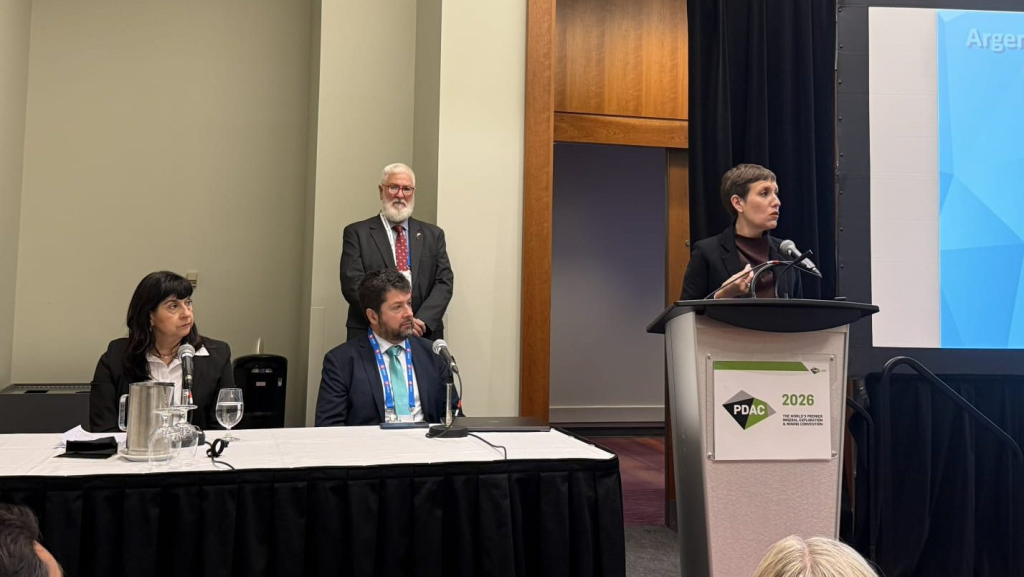
The province officially opened the Argentina Mining Pavilion at the Prospectors & Developers Association of Canada (PDAC) 2026, the world’s leading mining convention, delivering a clear message to the international market: Mendoza has re-entered the ranking of the Fraser Institute and is deepening a strategy focused on regulatory predictability, financial structuring, and long-term capital attraction.
Minister of Energy and Environment Jimena Latorre led the opening of the Argentina Mining Pavilion, highlighting Mendoza’s return to the Fraser Institute’s annual survey and reaffirming the province’s commitment to consolidating regulatory stability, institutional strength, and financing tools designed for long-term mining projects.
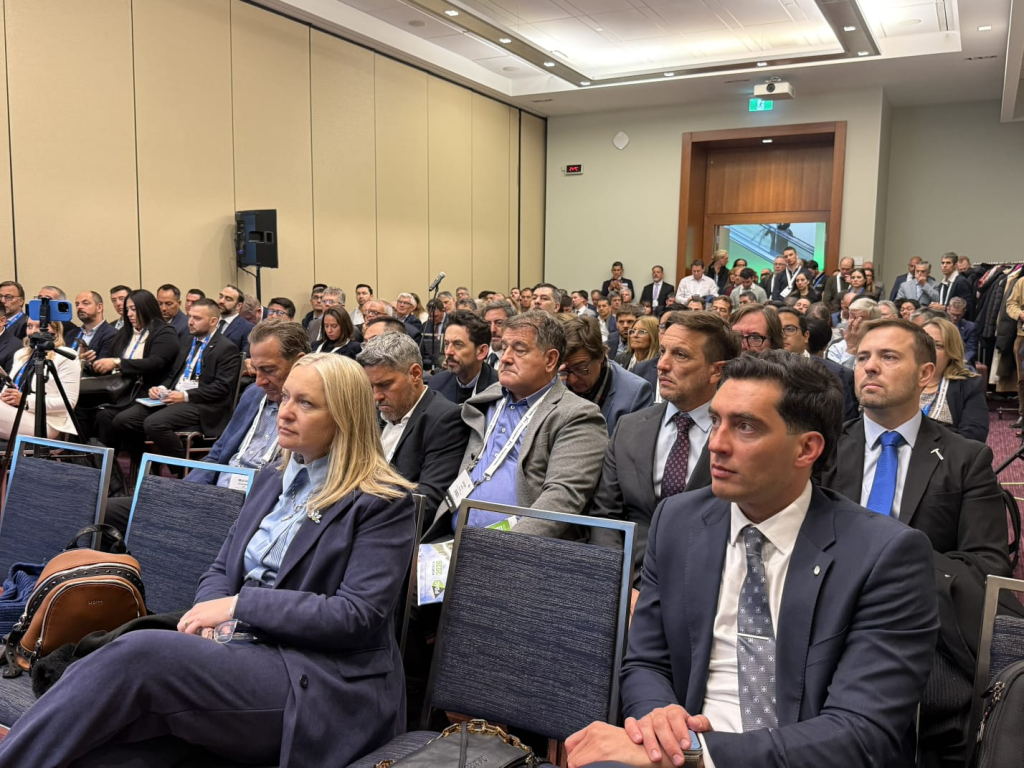
On the eve of the convention, which annually gathers more than 30,000 attendees from 130 countries, including over 2,500 investors in Toronto, Mendoza reaffirmed its international repositioning in one of the most influential arenas for global exploration and project development.
“We have returned to the global mining stage: we recently received confirmation that Mendoza is once again included in the Fraser Institute’s international ranking. This is highly significant for us, as the province had not been evaluated in this survey for three years,” Latorre stated, referring to the prestigious annual report that assesses the world’s most attractive jurisdictions for mining investment.
The minister emphasized that this return reflects a sustained public policy aimed at strengthening institutional stability and establishing clear rules of the game. “Looking ahead, the challenge is to ensure the long-term stability of these policies, because predictability is the cornerstone of building a sustainable global positioning,” she noted.
She further explained that the province’s vision centers on attracting investment based on reliable information, appropriate incentives, and transparent processes. “This means not only efficiency and transparency, but also institutional solidity and specific tools that facilitate the materialization of investments.”
Beyond showcasing its geological potential, Mendoza is also working to consolidate a financial framework that accelerates project execution. “We aim not only to present the development potential of Argentina and Mendoza, but also to bring forward financial vehicles capable of connecting projects not only from Mendoza but from the entire Andean region with capital markets,” she added.
Mendoza currently has more than 70 approved exploration projects. In addition, the PSJ Cobre Mendocino project has received its Environmental Impact Declaration, allowing it to move forward into construction and production, positioning the province within Argentina’s new copper development phase.
“Our vision is to accelerate these investments through articulation with capital markets, promoting projects designed for the next 20 to 30 years, under a truly sustainable mining model that is environmentally, socially, and economically sound. This industry requires long-term predictability and stability,” Latorre affirmed.
The pavilion opening also included participation from leading sector representatives such as Javier Rojas (Argentina Mining), Michael Meding (McEwen Copper – Los Azules Project), Joaquín Marías (Argenta Silver), Ernesto Cussianovich (Poliarquía), Guillermo Re Kühl (Sophia Energy), Juan Miguel Litvachkes (Compliance), and Olga Teresita Regalado, Minister of Mining of Catamarca.
Strategic Meetings with Mining Companies and International Banks
Following the pavilion opening, Mendoza’s delegation, composed of Latorre, Vice Governor Hebe Casado, Director of Mining Jerónimo Shantal, and Impulsa Mendoza CEO Sebastián Piña, carried out a strategic agenda of meetings with mining companies and financial institutions.
Among the key meetings was an engagement with Canadian company Kobrea, which in January began its first diamond drilling campaign within the Malargüe Western Mining District at the El Perdido project.
The delegation also met with Comafi and Macro banks to analyze financing alternatives for exploration and project development, as well as mechanisms to strengthen local suppliers and structure financial instruments linked to strategic initiatives such as Andean Bridge.
Institutional Cooperation and International Standards
Argentina participates in PDAC with two pavilions, one dedicated to mining companies and another to provinces, where Mendoza is represented. In this context, Vice Governor Casado took part in a sisterhood workshop between mining provinces from Canada and Argentina aimed at exchanging regulatory best practices and governance models.
“The objective was clear: to strengthen institutional ties and consolidate strategic cooperation that enhances mining development with predictable rules, environmental sustainability, and greater competitiveness,” Casado explained.
Intensive Working Agenda
On Sunday morning, Mendoza’s delegation held a strategic session in Toronto with more than 100 private-sector representatives, presenting the institutional, regulatory, and technical progress achieved in recent years. This included the implementation of a new digital Mining Cadastre, updates to the Royalty framework, provincial tax incentives, and coordination with Argentina’s Large Investment Incentive Regime (RIGI).
Within this framework, Mendoza is showcasing its project portfolio under defined rules, strong institutional backing, and a development vision aligned with the global energy transition, with the objective of attracting investment and consolidating its position in the global mining market.