

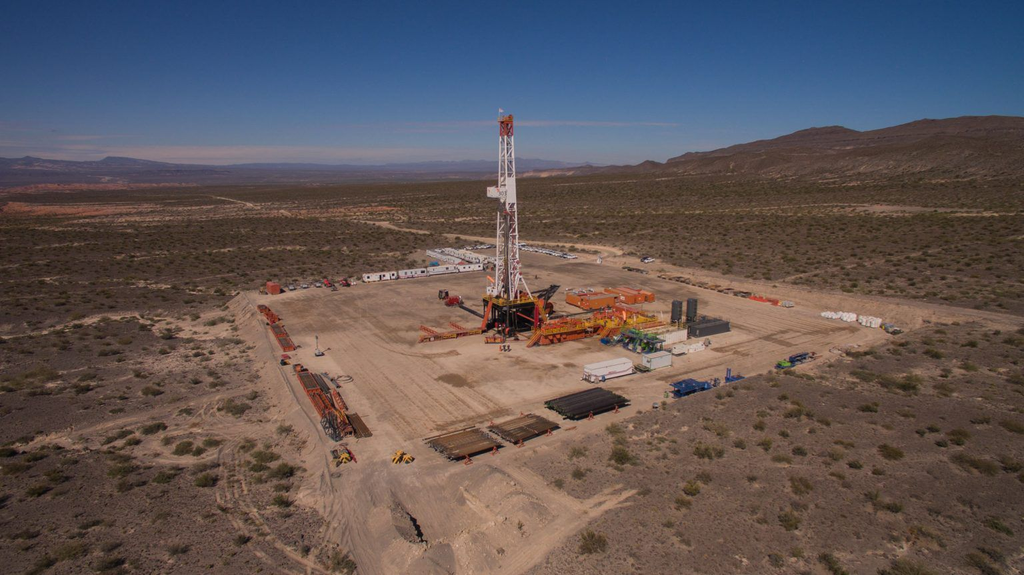
Mendoza awarded the Río Atuel and Atuel Exploración Sur areas to Petroquímica Comodoro Rivadavia and Hattrick Energy through an international and domestic competitive bidding process. Together, the companies committed $6.134 million to seismic studies, well work and new exploratory drilling.
Mendoza is expanding oil and gas exploration with the award of Río Atuel to Petroquímica Comodoro Rivadavia S.A. (PCR) and Atuel Exploración Sur to Hattrick Energy S.A.S. through an international and domestic competitive bidding process.
Together, the two companies committed $6.134 million in investment during the initial exploration period, primarily for seismic work, well interventions and new exploratory drilling.
Both areas were part of a provincial bidding round covering 17 oil and gas blocks and had already attracted interest from the industry. PCR had submitted a private-sector proposal for Río Atuel that was subsequently declared to be in the public interest, while Hattrick had conducted a Technical Evaluation Agreement (TEA) for Atuel Exploración Sur. The company invested $325,000 in that work, giving it preferential rights in the bidding process.
For Río Atuel, PCR committed $3.593 million in exploration investment across approximately 846.62 square kilometers. The work program includes reprocessing existing 2D and 3D seismic data, drilling and completing one exploratory well, and performing intervention work on an existing well.
At Atuel Exploración Sur, Hattrick committed $2.541 million across approximately 316 square kilometers. Planned work includes reprocessing 300 kilometers of 2D seismic data and 80 square kilometers of 3D seismic data, as well as drilling and completing a 1,500-meter exploratory well.
“These two areas had already generated concrete interest before the bidding process. Hattrick had conducted a technical evaluation at Atuel Exploración Sur, while PCR had submitted a private-sector proposal for Río Atuel. The bidding process turned that interest into specific exploration and investment commitments,” said Mendoza Energy and Environment Minister Jimena Latorre.
The permits will have an initial three-year exploration period. Once the companies have met their obligations for that stage, they may apply for a second two-year period, which requires, at a minimum, drilling another exploratory well to the depth of the nearest known reservoir.
Together, the two areas cover more than 1,160 square kilometers and are part of Mendoza’s broader strategy to expand oil and gas exploration, generate new data on its subsurface potential and attract investment to areas where additional geological studies and drilling are still needed.
“Mendoza’s conventional oil and gas sector still has significant potential ahead. These areas show that there is more geology to explore and companies willing to invest in finding it. Renewed exploration is how we build the production base for the decades ahead,” said Hydrocarbons Director Lucas Erio.
Exploration is essential to replacing reserves and supporting long-term production. Each exploratory well also generates geological data that can inform future bidding rounds and expand the province’s knowledge of its subsurface resources.
Opportunities for Local Workers and Suppliers
The new exploration programs will create activity throughout the oil and gas supply chain. Seismic surveys, drilling, well interventions and related logistics require specialized services, equipment and technical personnel, creating opportunities for Mendoza-based suppliers and workers in communities connected to the industry.
The work will provide new information about the geology and hydrocarbon potential of Río Atuel and Atuel Exploración Sur. If a discovery is made, the companies must notify the Province and complete the required procedures before they can move toward a potential production concession.
The operators will also be required to maintain environmental insurance and comply with environmental protection and prevention requirements. Among other obligations, they must submit a decarbonization plan outlining measures to reduce greenhouse gas emissions and the carbon footprint associated with their operations.
The Province will retain its inspection and enforcement authority throughout the exploration period. Companies must provide inspectors with access to the areas, submit required records and information, and report any incidents that occur during operations. The award decrees also establish penalties for failure to meet the agreed obligations.
With Río Atuel and Atuel Exploración Sur, nine areas have now been awarded through Mendoza’s international and domestic competitive bidding process, reflecting the province’s use of a continuous bidding model. The system is designed to keep opportunities available to operators over time and turn industry interest into specific commitments for investment, exploration and drilling.
“Nine awarded areas show that the model is working. Continuous bidding gives investors greater predictability while allowing the Province to remain open to new projects on an ongoing basis. That is the direction of our oil and gas policy: clear rules, transparent processes and consistent decision-making over time,” Latorre said.