

The bill would replace legislation that has been in place for 20 years and bring Mendoza’s oil and gas regulations in line with the major operational, technological and regulatory changes that have reshaped the industry. It introduces new tools for setting royalties and investment commitments, incentives for mature fields, a framework for unconventional development in Vaca Muerta, and stronger environmental requirements.
Mendoza’s Executive Branch has sent a new hydrocarbons bill to the provincial Legislature aimed at modernizing the province’s oil and gas regulatory framework while preserving the core principles governing Mendoza’s ownership of its hydrocarbon resources.
The proposal reflects the major operational, technological and regulatory changes the industry has undergone over the past two decades, including changes introduced at the national level under Argentina’s Bases Law.
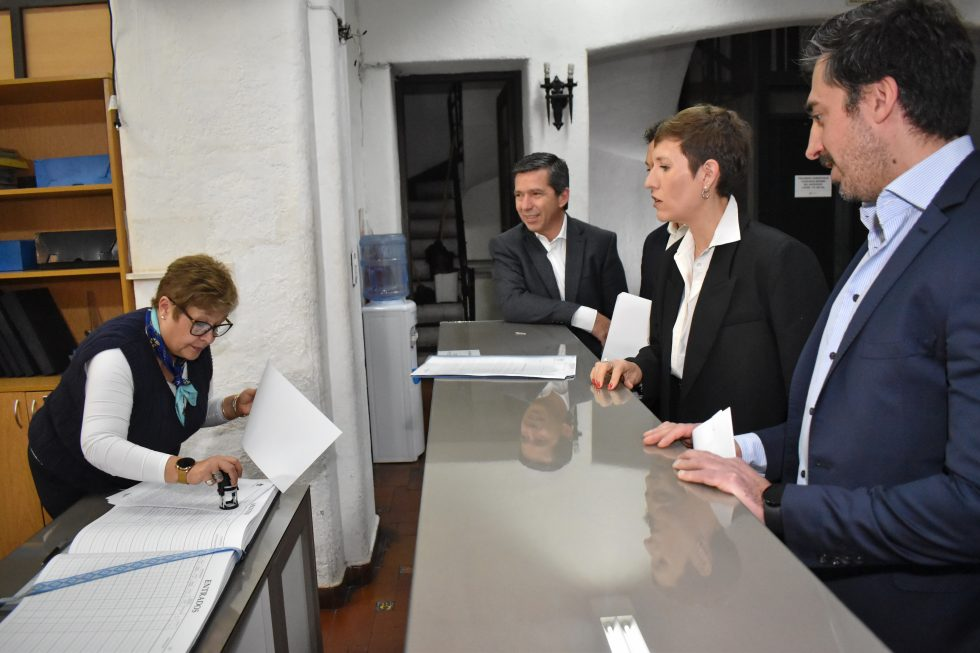
Designed to attract investment and new projects, increase production from mature fields and create the conditions for unconventional development in Mendoza’s portion of Vaca Muerta, the bill was formally submitted by Energy and Environment Minister Jimena Latorre. She was joined by Chamber of Deputies President Andrés Lombardi, Hydrocarbons Director Lucas Erio and Legal Affairs Director Bruno De Pasquale.
“The goal is to bring our regulations in line with the needs of an industry undergoing a major transformation and to position Mendoza for the next 50 years,” Latorre said.
She added that the province will “continue working with companies in the sector by providing clear rules, long-term policies and a regulatory framework that reflects the industry as it operates today. Our goal is to sustain activity, continue attracting investment and keep exploring Mendoza’s potential so that it translates into higher production and more jobs for Mendoza residents.”

The bill would replace legislation enacted two decades ago and adapt the regulatory framework to Mendoza’s two distinct oil and gas realities.
The province’s producing basins include mature conventional fields, where the challenge is to sustain activity, recover production and extend field life through further exploration and new technologies. At the same time, the Neuquén Basin—particularly in Malargüe—holds unconventional potential in Mendoza’s portion of Vaca Muerta, where development requires larger investments and a regulatory environment suited to long-term projects.
To address those differences, the bill proposes a more flexible system for setting royalties, incentives and investment requirements based on the characteristics of each area. It also explicitly incorporates unconventional oil and gas development into provincial law, updates environmental obligations, gives priority to local workers and suppliers, and strengthens inspection and enforcement mechanisms.
A New Approach to Royalties and Investment
One of the most significant changes involves royalties. Current law sets a general royalty rate of 12% of production and allows the rate to be reduced to as low as 5% depending on the characteristics of each project.
The proposed legislation would introduce a different system for future bidding rounds. The benchmark royalty rate would be 15%, but companies would be able to offer a higher or lower percentage as part of their bids.
This would allow Mendoza to tailor royalty rates to the economics of individual areas. The Province could seek a higher rate from projects with stronger economics or accept a lower rate when needed to make an investment viable, particularly in mature or lower-productivity fields.
Area awards would not be based solely on the royalty rate offered. The evaluation would also consider the overall value of the project, expected production and committed investment, with the investment commitment carrying substantial weight in the bidding formula.
The bill also includes incentives to encourage investment in areas where increasing production is more difficult. The Executive Branch could reduce royalty rates for projects involving the reactivation of inactive wells, additional exploration, heavy crude production and enhanced oil recovery. When technically justified, royalty rates for these projects could fall below 5%.
Companies could also offset part of their production-area fees through new exploration-risk investments, provided they invest at least twice the amount they seek to offset. For exploration permits, fees associated with an extension could also be reduced by as much as 80%.
Vaca Muerta Is Explicitly Incorporated Into Provincial Law
Another major change is the addition of unconventional hydrocarbon production concessions, a category not included in Mendoza’s 2006 law.
The bill would allow existing concessions to be converted to the unconventional framework in accordance with national legislation, establishing a specific provincial regulatory structure for these projects.
This is particularly relevant to Malargüe and Mendoza’s portion of Vaca Muerta, where unconventional development requires substantial capital, longer investment horizons and operating conditions that differ significantly from those of mature conventional fields.
Stronger Environmental Requirements
The bill would also strengthen environmental responsibilities throughout the entire life cycle of an oil and gas field, from exploration and production through final closure and abandonment.
Companies would be required to prevent and mitigate environmental impacts, conduct the required monitoring and, when necessary, remediate or restore affected areas. Their responsibilities would also cover the closure and abandonment of wells, facilities and pipelines, as well as the remediation of environmental liabilities.
The legislation explicitly establishes that a company’s environmental obligations do not end when it leaves an area. Operators would also be required to file a publicly available Good Practices Declaration every two years, covering community relations, environmental performance, workforce training, local suppliers, transparency, integrity, occupational health and safety.
Mining and Oil and Gas Operations in the Same Area
The bill also establishes rules for situations in which mining rights and oil and gas projects overlap geographically—an issue that is becoming increasingly relevant as mineral exploration expands in Mendoza.
As a general principle, both industries would be expected to pursue technical, operational, environmental and scheduling solutions that allow projects to coexist. Geographic overlap alone would not result in the expiration, termination or rejection of either party’s rights. Rights holders would instead be required to share information and seek alternatives that allow both activities to move forward.
If coexistence proves impossible or creates risks that cannot be reconciled with safety, environmental protection, reservoir integrity or the responsible development of natural resources, the Executive Branch would make a determination with input from both mining and oil and gas authorities and after hearing from the parties involved.
The decision would take into account factors including the status of the rights involved, whether operations could be coordinated or carried out at different times, investments already made or committed, and potential environmental, social and territorial impacts.
Updated Penalties and Additional Funding for Oversight
The proposed reform would also replace the current system of fines denominated in fixed peso amounts, which have become outdated.
Under the new system, penalties would be indexed to the price of regular-grade gasoline, and violations would be divided into four categories based on severity. Penalties would take into account factors such as the seriousness and duration of the violation, the damage or risk created, any financial benefit obtained, repeat violations and the company’s actions to correct the problem.
The bill would also create a Hydrocarbon Activity Oversight Fee to fund inspections, enforcement, equipment and technical capacity. The fee could not exceed 0.8% of the amount paid in royalties and/or applicable activity fees.
The Ministry of Energy and Environment, through the Hydrocarbons Directorate, would serve as the enforcement authority. It would oversee production and operator compliance and supervise wells from initial drilling through final abandonment, working in coordination with the provincial environmental authority.